03 — How we work
Retail & Hyperlocal.
Media placed inside the trade area of a specific store or cluster, planned from catchment behaviour rather than city-level reach.
The decision
Draw the catchment first. The panel is what you go and get.
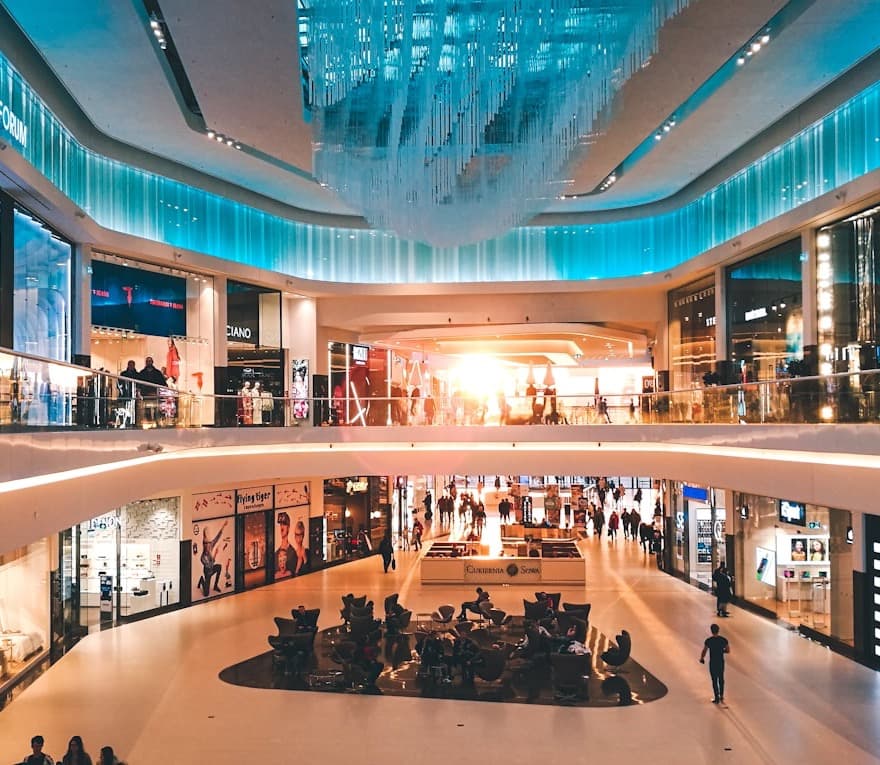
Why it is worth planning
Most purchase decisions are made within a few kilometres of where the purchase happens. A city-wide plan spends most of its weight on people who will never travel to the store, which looks efficient on a reach number and is not efficient at all on a footfall one. Hyperlocal inverts the arithmetic: fewer people, far more of whom can act.
It is also the layer where India's residential density does unusual work. A society lift panel is seen twice a day by the same household, in a confined space, with nothing else to look at. That is a frequency profile no mass medium can buy, and it is available at a fraction of the cost — provided the catchment has been chosen on evidence rather than on which societies a vendor happens to hold.
The production is small and the permission is local, which is why both get skipped. A lift panel that is poorly flexed or dimly lit is a notice on a wall. A mall fascia treated as a sky-sign, or a pole kiosk run without the corporation's advertisement-tax file, is a booking that does not survive the first inspection. Monitoring photographs still close the loop: the catchment is only as good as the face that actually went up.
What we plan
Categories, not a holding.
Typical sizes and how the market buys them. None of this is a site we hold.
- Mall fascia
- 16 × 5 ft
- Atrium branding
- 12 × 10 ft
- Lift panel
- 2 × 3 ft
- Society gate arch
- by gate
- Store catchment cluster
- by trade area
How the buy is made
The part that decides whether it works.
- 01
Draw the catchment first
We define the realistic trade area of the outlet — how far people travel to it, which routes they use, which competing outlets truncate it — before looking at any media. A plan built on an unexamined three-kilometre circle is a guess with a radius.
- 02
Match the format to the moment
Lift panels reach a household at the start and end of the day. Mall atrium and fascia reach a shopper already in spending mode. Store-front and last-mile formats reach someone within minutes of the decision. These are different jobs and should not be bought interchangeably.
- 03
Cluster, do not scatter
Saturating the catchment of one outlet reliably moves that outlet. One panel each across thirty societies spread over a city moves nothing measurable. We would rather do three catchments properly than thirty thinly.
- 04
Read it against footfall
Hyperlocal is one of the few outdoor layers where a before-and-after read at the store is practical. We ask for the outlet's own numbers and set the campaign window so the comparison is honest.
If a word above was doing work you had to guess at
When it earns its place
Concrete situations, not a menu.
- 01A store, a cluster, or a dealership with a trade area you can draw — not a brand that only exists on a screen.
- 02A household you can reach twice a day in a lift, on the same route, with nothing else competing for the glance.
- 03A mall or high-street moment where the shopper is already in spending mode, and the fascia or atrium is the last message before the till.
- 04Three catchments done properly. Thirty societies with one panel each is a mailing list, not a plan.
When to spend it elsewhere
We would rather say so early.
If the brand has no physical point of purchase and no geographically concentrated audience, this layer will underperform a broader outdoor plan. Hyperlocal earns its keep when there is somewhere specific for the audience to go.
What lands on your desk
Documented, not described.
Every campaign ends with a file you can hand to someone who was not in the room.
- Catchment definition with the reasoning shown
- Format mix mapped to the decision moment it serves
- Society, mall and outlet-adjacent placement coordinated as one buy
- Approvals and permissions handled with the relevant management
- Geo-tagged, dated photographs of every placement
- A read against the outlet's own footfall or sales window where available
Questions that actually get asked
Including the ones about cost.
How much does retail and mall advertising cost?
+
By catchment, format and permission — a lift panel, a fascia, an atrium and a pole-kiosk run are different purchases, and society management, mall management and the corporation each invoice differently. We will show you the variables. We will not print a band that pretends they are one product.
What is a catchment, and how do you draw it?
+
The realistic trade area of the outlet: how far people travel to it, which routes they use, which competing outlets cut it short. It is not a three-kilometre circle on a map. We draw it from how the store actually trades, then look for media inside that shape.
Why does a society lift panel work?
+
The same household sees it twice a day, in a confined space, with nothing else to look at. That frequency is the product. It fails when the society is outside the trade area, or when the panel is treated as leftover inventory a vendor happened to hold.
Who has to approve mall and society media?
+
Mall management, society management, and in many cities the corporation under sky-sign or advertisement tax. We handle the relevant file before anything goes up. A booking that skips the permission is a booking that comes down.
Can you measure whether hyperlocal worked?
+
Against the outlet's own footfall or sales window, when the store will share it and the campaign is timed so the comparison is honest. That is a read, not a research figure, and it is one of the few outdoor layers where it is practical.
Do you hold society or mall inventory?
+
No. We plan the catchment and negotiate access. Holding the panels would decide the plan from the stock. The catchment decides the plan; the stock is what we go and get.
The rest of the plan
Most plans use more than one.
Retail is the last mile of a corridor the outdoor plan already holds. Activations sit in the same catchment when someone needs to stop, not just pass. City-wide outdoor without this layer is a plan that ends a kilometre too early.
- 01
Outdoor & Transit
Hoardings, transit and street furniture, compared and bought across owners.
Read → - 02
Digital Out-of-Home
LED and programmatic DOOH, bought by daypart and location.
Read → - 04
Broadcast, Print & Cinema
News television, radio, national dailies and on-screen.
Read → - 05
Activations & Corporate Gifting
When the plan needs a person in the place, not only a board.
Read → - 06
Barter & Trade Structuring
When the media plan is right and cash is the constraint.
How barter works →