02 — How we work
Digital Out-of-Home.
Digital screens in 39 Indian markets, bought by daypart and location rather than by the month, so weight lands when the audience is actually in front of them.
The decision
The same screen is a different product at nine and at four.
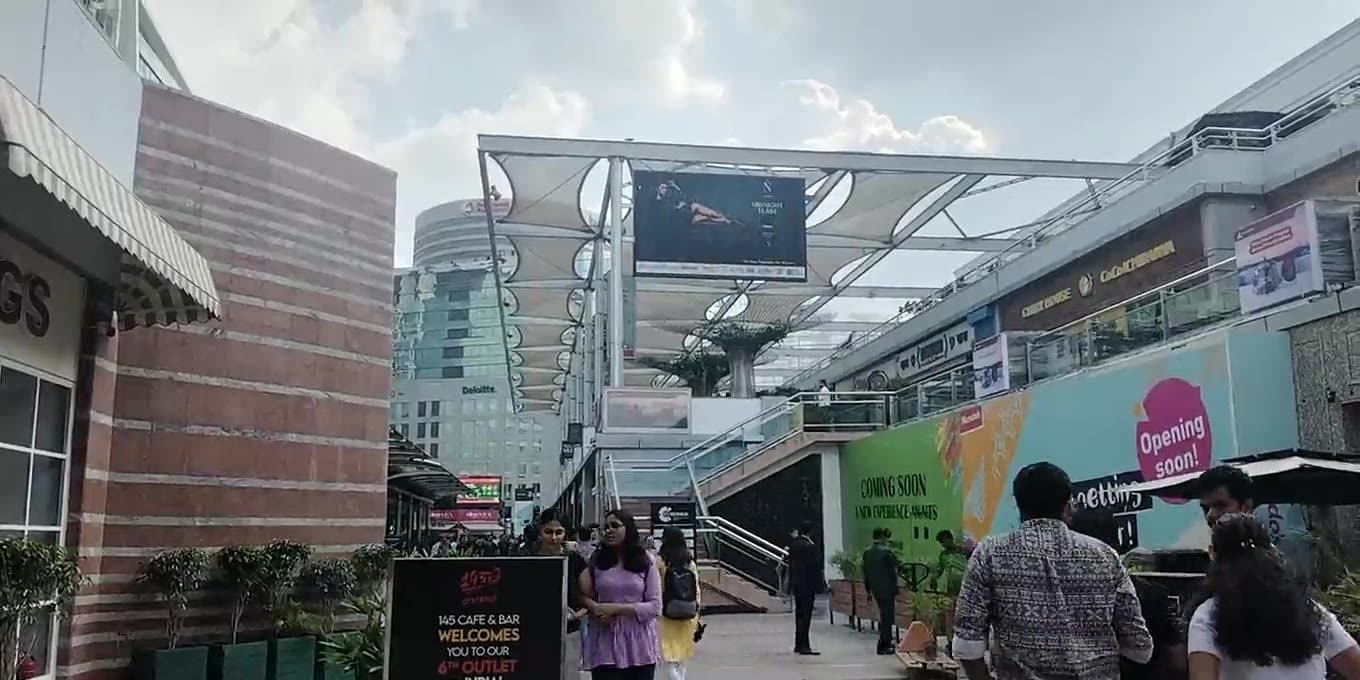
Why it is worth planning
The reason to buy a digital screen is not that it is digital. It is that the same structure can carry a different message at eight in the morning than it carries at nine at night, and that a campaign can be changed after it launches without reprinting anything. A brand that buys DOOH and runs one static creative for four weeks has bought an expensive hoarding.
The trap is the loop. A screen sold as a share of a rotation is only worth what the rotation gives it — how many other advertisers, how long each slot, and whether your slot lands when footfall peaks or when the corridor is empty. Those are the questions that decide value, and they are the ones least often asked at the point of purchase.
Illumination is not a production extra on a digital face; it is the face. A screen that cannot hold contrast at noon is a blank rectangle in the one hour an office district is busiest. Monitoring photographs still matter — a play-out log says the file was sent; a dated picture says the screen was on, in colour, and pointing the right way.
What we plan
Categories, not a holding.
Typical sizes and how the market buys them. None of this is a site we hold.
- LED façade
- 32 × 18 ft
- Portrait screen
- 6 × 11 ft
- Ribbon display
- 40 × 10 ft
- In-mall network
- bought by daypart
- Programmatic DOOH
- bought by impression
How the buy is made
The part that decides whether it works.
- 01
Buy the daypart, not the month
Office-district screens are worth having at commute hours and worth very little at four in the afternoon. Mall and high-street screens invert that. We weight the buy to when your audience is present rather than pay flat across a calendar month.
- 02
Interrogate the loop
Slot length, loop duration and how many advertisers share it decide what a screen is really worth. We ask for it in writing before committing, because a ten-second slot in a two-minute loop and the same slot in an eight-minute loop are not the same purchase.
- 03
Creative built for the format
A portrait lift screen viewed from two metres and an LED façade viewed from two hundred are different design problems. We specify per format — legible word counts, contrast that survives daylight, and a message that completes inside the slot.
- 04
Change what is not working
The advantage of digital is that a message can be replaced mid-flight. We plan for at least one creative decision point during a campaign instead of treating the launch asset as final.
If a word above was doing work you had to guess at
When it earns its place
Concrete situations, not a menu.
- 01A message that should change with the hour — commute versus lunch versus evening — on a screen that can actually change.
- 02A launch that needs a mid-flight edit: a price, a SKU, a date, a language. Reprinting a hoarding for that is the expensive way.
- 03A location whose audience is sharply timed. An office corridor at 9am is not the same purchase as the same corridor at 4pm.
- 04A loop you have seen in writing. Slot, duration, and how many other advertisers share it, agreed before the booking, not after the invoice.
When to spend it elsewhere
We would rather say so early.
If the site only justifies one creative and one daypart, a static placement will usually deliver more presence for the same money. Digital earns its premium when you use what makes it digital.
What lands on your desk
Documented, not described.
Every campaign ends with a file you can hand to someone who was not in the room.
- Daypart and location weighting mapped to your audience
- Loop composition and slot length confirmed in writing
- Format-specific creative specifications before build
- Play-out logs reconciled against what was booked
- Photographs of the screen live, dated and geo-tagged
- Mid-flight creative swap where the plan calls for it
Questions that actually get asked
Including the ones about cost.
How much does DOOH advertising cost in India?
+
By daypart, location, slot length and loop share — not by the month, and not by a city average. A ten-second slot in a two-minute loop and the same slot in an eight-minute loop are different purchases. We price the rotation you are actually in. We do not publish a starting-from figure that would describe none of them.
What is a loop, and why does it matter?
+
The loop is the rotation the screen plays: your slot, everyone else's, and how long before yours comes around again. It is the thing that decides how often a passer-by sees you. Ask for it in writing. A screen sold without a loop specification is a screen sold on hope.
When is a static hoarding the better buy?
+
When you have one message and one daypart, and the site justifies holding a face rather than a share of a rotation. Digital earns a premium for changeability and for timing. If you use neither, you have bought an expensive hoarding.
How do you prove a digital campaign played?
+
Play-out logs reconciled against the booking, and dated, geo-tagged photographs of the screen live. A log without a picture can describe a file that never reached the face. A picture without a log cannot show the hours you paid for.
Can creative be changed after launch?
+
Yes — that is the reason to buy digital at all. We plan for at least one decision point mid-flight. The swap is part of the work, not a favour asked after the first week disappoints.
Do you own the screens?
+
No. We buy access to them. Ownership would lock the plan to one network's inventory. Independence is what lets us weight an office daypart on one owner's screen and an evening high-street on another's.
The rest of the plan
Most plans use more than one.
DOOH takes the hours a printed hoarding cannot change. It is a poor substitute for holding a corridor, and a good one for timing a message to the people who are actually in front of it.
- 01
Outdoor & Transit
Hoardings, transit and street furniture, compared and bought across owners.
Read → - 03
Retail & Hyperlocal
Mall, multiplex, society lift and store-catchment media.
Read → - 04
Broadcast, Print & Cinema
News television, radio, national dailies and on-screen.
Read → - 05
Activations & Corporate Gifting
When the plan needs a person in the place, not only a board.
Read → - 06
Barter & Trade Structuring
When the media plan is right and cash is the constraint.
How barter works →