Barter advertising
Advertise with what you already own.
Finished goods, unsold stock, capacity or vouchers, converted into outdoor, retail and broadcast media across India. Valued in writing before anything moves. No cash leaves the marketing budget.
Send the category and rough value. You’ll get a straight answer on whether barter is right for it — including when it isn’t.
You give
You get
- Finished goodsOutdoor
- Unsold stockBroadcast
- CapacityRetail
Why this exists
Three costs that never appear on a line item.
- 01
Stock depreciates. Quietly.
Ageing inventory costs warehousing, ties up working capital and loses value every month it sits. None of that appears as a line item, which is exactly why it goes unaddressed.
- 02
The marketing budget is capped.
The mandate to grow is there. The cash to buy national media is not. So reach gets cut before the plan is even written.
- 03
Liquidation destroys pricing.
Bulk cash sales return a fraction of value, build nothing, and put your product in front of exactly the channels you spent years keeping it away from.
The exchange
What you give, what you get.
You give
You get
- Finished goodsOutdoor across 39 cities
- Unsold or seasonal stockBroadcast, radio and print
- Manufacturing capacityRetail and mall presence
- Vouchers and gift cardsDigital out-of-home
- Services and subscriptionsActivations and gifting
Agreed at fair market value, in writing, before either side performs.
The other half of the trade
What the stock turns into.
Not a media schedule on a slide. Placements in the street, in traffic, on a working day — photographed by us, on site, while they were running.

Kochi 
Kozhikode 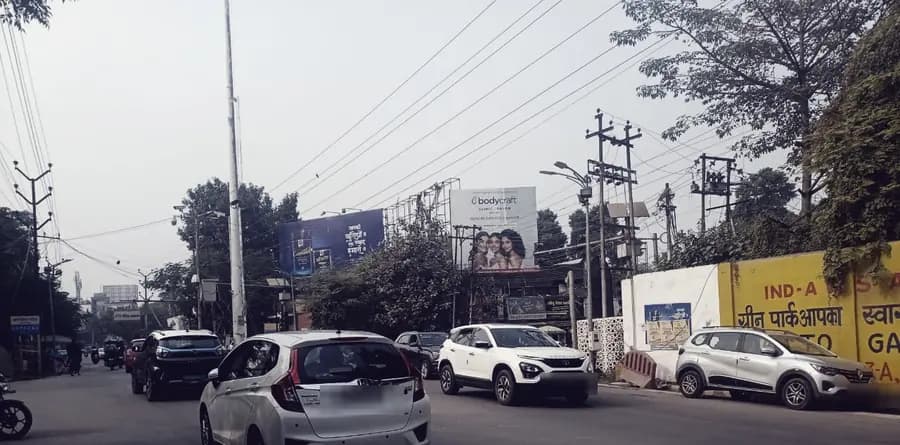
Kanpur
How it works
Five steps. No surprises.
- 01
Valuation, before anything else
You tell us what you hold and what it is realistically worth. We tell you what media that buys. Both numbers are agreed in writing before either side performs — there is no deal until they are.
- 02
A signed reciprocal trade agreement
Scope, markets, media value, timelines and the channels your goods may move through, all documented. Nothing proceeds on a handshake.
- 03
The media plan
Built to your objective and your markets — not to whatever happens to be unsold this quarter. You approve the plan before it is booked.
- 04
Campaign and documentation
Run and managed by our team, with run schedules, geo-tagged placement photographs and post-campaign reporting delivered as standard.
- 05
Settlement in goods
You fulfil the agreed value in product. It moves through controlled corporate, institutional and channel-partner networks that protect your pricing.
The part that usually worries people
Barter has a reputation problem because it is often done badly.
Will this undercut my own trade?
Goods are placed through defined corporate, institutional and gifting channels, agreed with you in advance and named in the contract. They do not enter the open market and they do not reach the discounters who would undercut your own trade.
What does my auditor actually see?
This is not an off-record swap. It is two distinct supplies — a sale of goods by you, a supply of media services by us — each separately invoiced and taxed under GST. Your auditor sees a clean paper trail on both sides.
Am I being short-changed on value?
We work from realistic net realisable value, not MRP, and we quote media on the same commercial basis you would be given for a cash buy. If either number does not stand up to your scrutiny, we would rather you walked.
Who it suits
And who it doesn’t.
Consumer brands carrying seasonal stock. Manufacturers with unused capacity. Retail chains with slow-moving lines. Companies entering a region without a budget to match the ambition.
It suits you less if your stock is fast-moving and fully priced, if your category cannot tolerate secondary distribution, or if the value you hold is too small to justify building a proper media plan around. In any of those cases we will tell you to buy media with cash — it is a shorter conversation and a better outcome.
Who actually decides
This dies in the gap between two budgets.
Marketing has the mandate and no cash. Finance has the stock and no way to book media against it. Neither owns the whole decision, so raising it is nobody’s job — and it never gets raised.
What you get
Reach you were not budgeted for, planned and bought at the same rate you would have paid in cash.
What you need from the other one
Finance to agree what the stock is worth and to authorise it moving. Bring them the media plan, not the barter idea.
What you get
Ageing inventory off the books at a defensible value, through channels you name, with a tax invoice on both legs.
What you need from the other one
Marketing to want the plan on its own merits. If they would not buy it for cash, the trade is not a saving.
The first meeting that goes anywhere has both of you in it. We are happy to be on that call and to take the finance questions directly — it is a shorter conversation than two rounds of forwarding.
For your finance team
Two invoices. Nothing netted off.
Most objections to barter are really objections to how it used to be done — off the books, on a handshake, impossible to audit. This is the structure we actually contract under, drawn so you can forward it.
How the paperwork actually looks
- Leg 1YouBizex4UGoods, capacity or vouchers
You raise a tax invoiceGST charged
A sale of goods by your company, at the value agreed in the trade agreement. GST charged at your product's applicable rate.
- Leg 2Bizex4UYouMedia and activation services
We raise a tax invoiceGST charged
A supply of advertising services by us, at the media value agreed in the same agreement. GST charged at the applicable services rate.
Two supplies, not one swap. Both invoices are raised in the normal way and the GST on each leg is claimable as input credit in the normal way. Nothing is netted off, and nothing sits off the books — your auditor sees an ordinary purchase and an ordinary sale.
We will walk your finance team through this before anything is signed. We would also encourage you to have your own tax advisor confirm the treatment for your category — it is a straightforward structure, but it should be your advisor who says so, not us.
Start here
Three taps and a real answer.
We will not put a number on your stock from a web form, and you should be suspicious of anyone who does. Tell us the shape of it and you will get a straight reply from a person.
Pick a category and a rough value, then tell us who is asking.
You will get a straight answer on whether barter suits what you are holding — including when it does not, and when a cash buy would serve you better.
Questions
The ones people actually ask.
How is the value of our goods decided?
+
By agreement, in writing, before the contract is signed. We start from realistic net realisable value rather than MRP, because MRP-based barter is where most of these deals go wrong. The media is priced on the same commercial basis you would be quoted for a cash campaign. If we cannot agree on both numbers there is no transaction — which is precisely why we settle them first.
Where do our products actually end up?
+
In controlled corporate, institutional and channel-partner networks — corporate gifting programmes, employee benefit schemes, distributor incentives and similar. The permitted channels are agreed with you before signing and written into the agreement. Your goods do not go to open-market discounters, and if a category is sensitive we will restrict the channels further at your instruction.
How does our finance team book this?
+
As two separate transactions, not a netted-off barter entry. You raise a tax invoice for the goods; we raise a tax invoice for the media services. GST applies on both legs and both are claimable in the normal way. We will walk your finance team through the treatment before signing, and we would encourage you to take your own tax advice as well — it is a straightforward structure, but it should be your advisor who confirms that.
Are we getting a worse media rate because we are paying in stock?
+
No — and you should ask us to prove it. We quote the media at the rate we would quote for cash, and you are free to benchmark it against any other agency before you sign. The saving to you comes from moving the cost off your cash budget, not from us discounting the media or over-valuing your goods.
How long does it take to go live?
+
Typically three to five weeks from a signed agreement and an approved media plan. Outdoor and retail depend on site availability cycles; broadcast and digital usually move faster. Seasonal stock has its own clock, so tell us the deadline early and we will plan backwards from it.
Is there a minimum size?
+
The model works best above a level where building a proper media plan is worth the structuring effort. Below that you are better off with a straight cash buy and we will say so. Tell us roughly what you are holding and we will give you a direct answer rather than a proposal.
What if we only want to trade part of the campaign?
+
That is common and often sensible. Many engagements are part cash, part goods — you cover the portion your budget allows and trade the remainder. The structure and the documentation are identical.
Tell us what you’re sitting on.
The category and a rough value is enough to start. We will tell you what media it buys, or that it doesn’t.